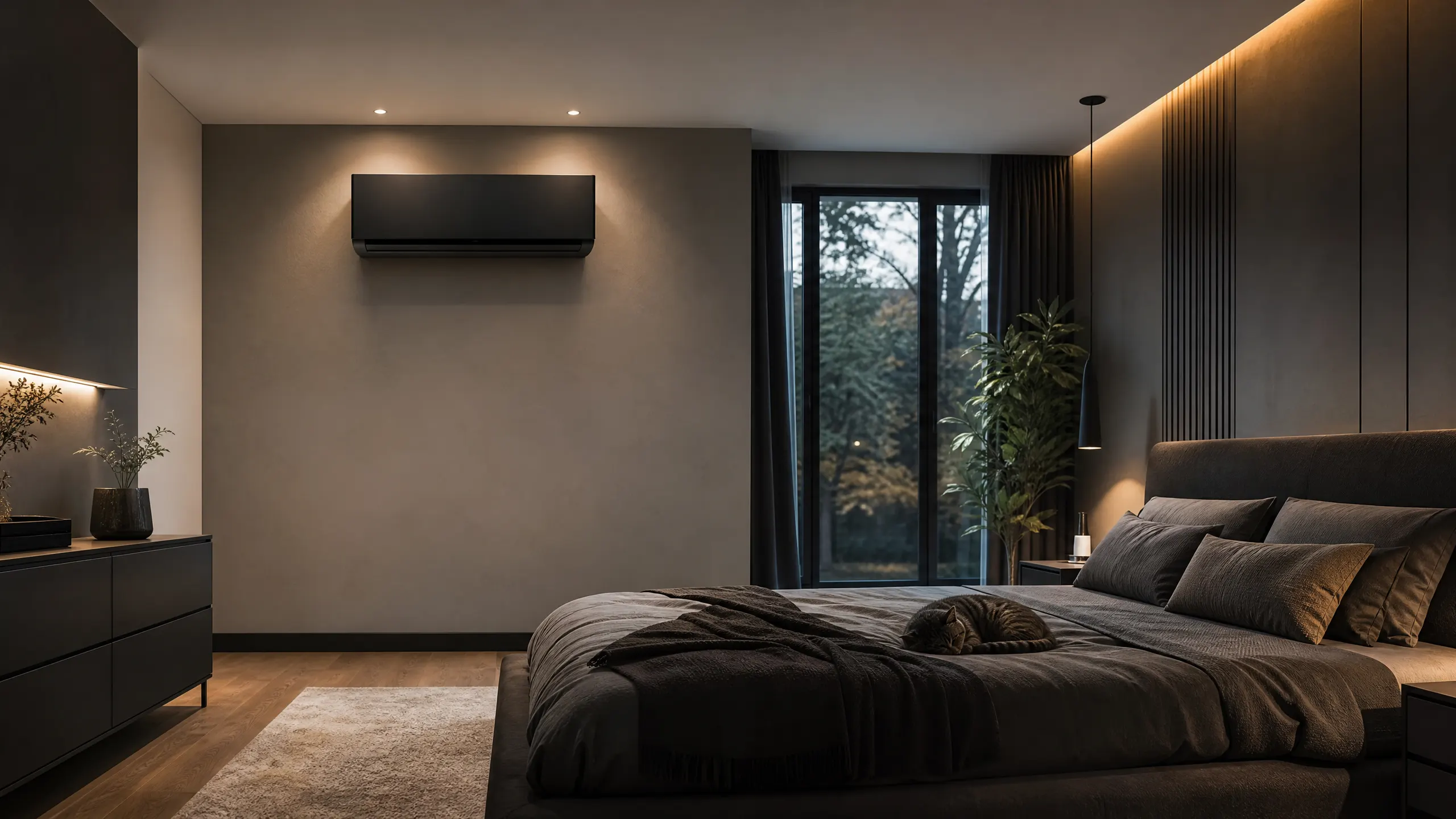
A dark, minimalist bedroom with a king-size bed, wall-mounted air conditioning unit, and large windows, with a cat sleeping on the duvet.

Mini Split Installation in Central, CO

Tell us about the job

Takes about a minute. No obligation.

New system or replacementMini-splitGilpin County, CO
Step 1 of 2

What ZIP code is the job in?

Gas heats most homes here

Utility gas heats 54.2% of occupied homes in Gilpin County, with electricity and propane splitting most of the rest. A mini split works alongside a gas furnace instead of replacing it, handling cooling and shoulder-season heat while the furnace covers the coldest months.

What that means for installation

If a gas furnace already heats the house, the mini split install only needs to add refrigerant lines and a condenser, not rework the whole heating setup. That keeps the job narrower and the system sized for the load it's actually meant to carry.

15°F
the average winter night it heats against
70°F
the average summer afternoon it cools against
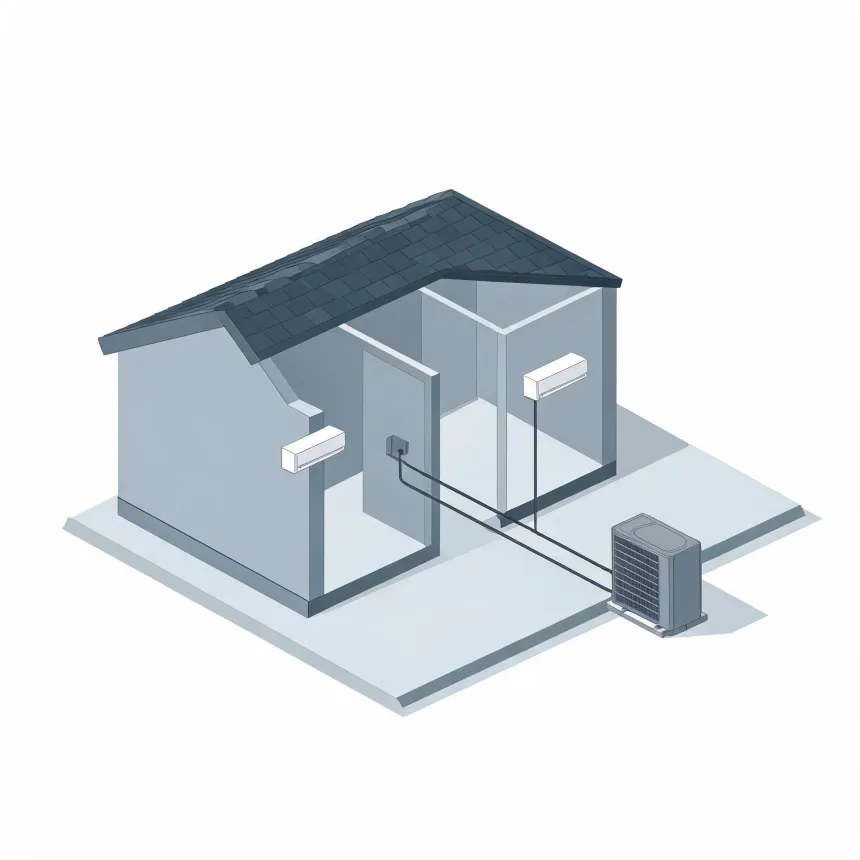
Isometric illustration of a cutaway gray house with a dark shingled roof, showing two wall-mounted indoor air handlers connected by line sets to an outdoor condenser unit on a pad outside.

Summer afternoons in Gilpin County average 70°F, and no month runs warm enough to need cooling.

A mini split here is doing light duty, so a dependable mid-range system is the right call, not the highest efficiency model on the shelf.

Electricity runs 14.92 cents a kWh here, cheaper than most states, so the high-efficiency model earns its keep slower

Power costs 14.92 cents a kWh statewide
Summer afternoons average 70°F
71 damaging wind events from 2015 to 2024

Gilpin County falls in climate zone 5B, a cool zone where heating carries most of the load. Any mini split installed here, ductless or not, counts as a split-system heat pump under the federal standard, and units built from 2023 onward have to clear 14.3 SEER2 for cooling and 7.5 HSPF2 for heating. That floor applies everywhere, not just here, but it's the baseline a contractor is starting from before anything gets sized to the house. On top of the equipment cost, a system that meets these minimums may qualify for the federal energy efficiency tax credit, worth looking into before the install is scheduled.

A dependable mid-range system is the right call here

A mid-range system here will spend its life doing light work. Pick one from a contractor who backs the install, and let the install move forward.

Find a contractor
A beige split-system air conditioner outdoor condenser unit mounted on metal wall brackets atop a stucco wall.

The box on the wall is the easy part

What drives the price on a mini split job is mostly what has to happen before the indoor and outdoor units get mounted. The line set between them has to be run, through a wall or along one, and the length and the number of bends in that line affect both material and labor. Every indoor head needs its own circuit on the outdoor condenser, so a multi-zone setup costs more than a single head doing the same square footage. Where the condenser sits matters too. It needs clearance on all sides to pull air through the coil and dump heat, so a tight side yard or a spot that needs a mounting pad or bracket adds work a flat concrete pad wouldn't. Electrical is its own piece. A mini split runs on its own dedicated circuit, and if the panel doesn't have room for a new breaker, that's a separate job before the install can finish. None of this is wasted money. A line set run short and straight, a condenser with room to breathe, and a circuit sized right the first time are what keep the system running the way it's rated to.

Ask what happens to heating capacity as it gets colder outside

Every heat pump loses some output as the temperature drops, but not all of them lose it at the same rate. Ask for the capacity curve on the unit being quoted, not just the rated output at a mild temperature. A system that holds its heat output steady in the cold leans less on backup heat than one that tapers off fast.

Ask who stocks parts for the brand being proposed

A mini split needs service over its life, a sensor checked, a coil cleaned, refrigerant looked at. Ask the installer whether other contractors in the area carry parts and work on the brand they're proposing. A brand only one contractor services ties the homeowner to that contractor for every call afterward.

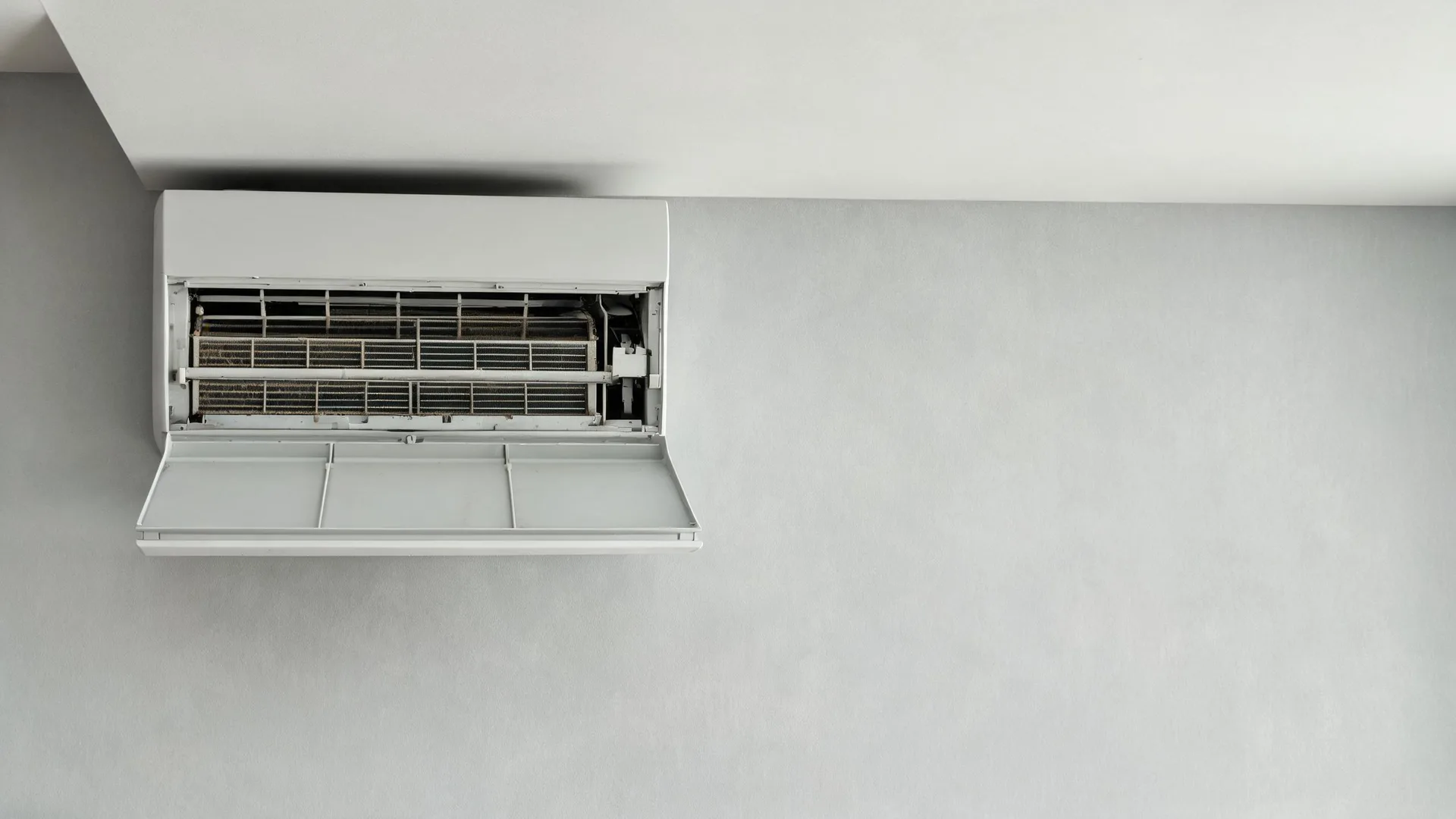
If the furnace is staying, the old cooling here is probably a window unit or a through-wall sleeve, and it comes out on its own schedule, separate from the mini split install. A window unit just lifts out of the frame. A sleeve unit takes more care, since the wall opening either gets sealed over or reused for the new line set, and that's worth deciding before the crew shows up. Neither one runs on refrigerant lines that need recovery, so there's no special disposal step, just hauling it off. Worth checking whether any existing wiring from the old unit can be reused for the new condenser, since that's a question the installer needs answered before they run anything new.

Installation starts with a walkthrough, not a drill. The crew checks where the indoor head will mount, where the condenser will sit outside, and the path the line set will take between them, because that path decides how much of the day goes to running lines versus mounting equipment. Once that's settled, the indoor unit goes up on its bracket, a hole gets drilled through the wall for the line set, and the lines, drain tubing and wiring all pass through that same hole to the condenser outside. The lines get connected, the system gets vacuumed down to pull out air and moisture before refrigerant is released into it, and that step matters more than any other because trapped moisture in the lines causes problems later that are hard to trace back to the install. After that, it's a vacuum test to confirm the lines hold, power to the condenser, and a run-through checking that the head cools and heats and that the drain line actually moves water where it should.