









How often to change your AC filter in Colorado

Send the form, and lining up the air conditioner tune-up stops being yours to chase.

Let a pro reach out

A standard filter in a Colorado home needs changing about every 90 days during the summer. Dust here is dry and fine, not the heavy humidity grime you get in other parts of the country, so it tends to work through a filter faster than people expect. If your AC runs most days from June through September, check the filter at the start of the season and again partway through. A thinner one-inch filter clogs sooner, sometimes closer to the 60-day mark if you have pets or the windows stay open. A clogged filter makes the system pull harder to move air, and that strain is what leads to a frozen coil or a compressor working overtime on the hottest days. Checking it costs you a minute. Letting it go costs the system a lot more.

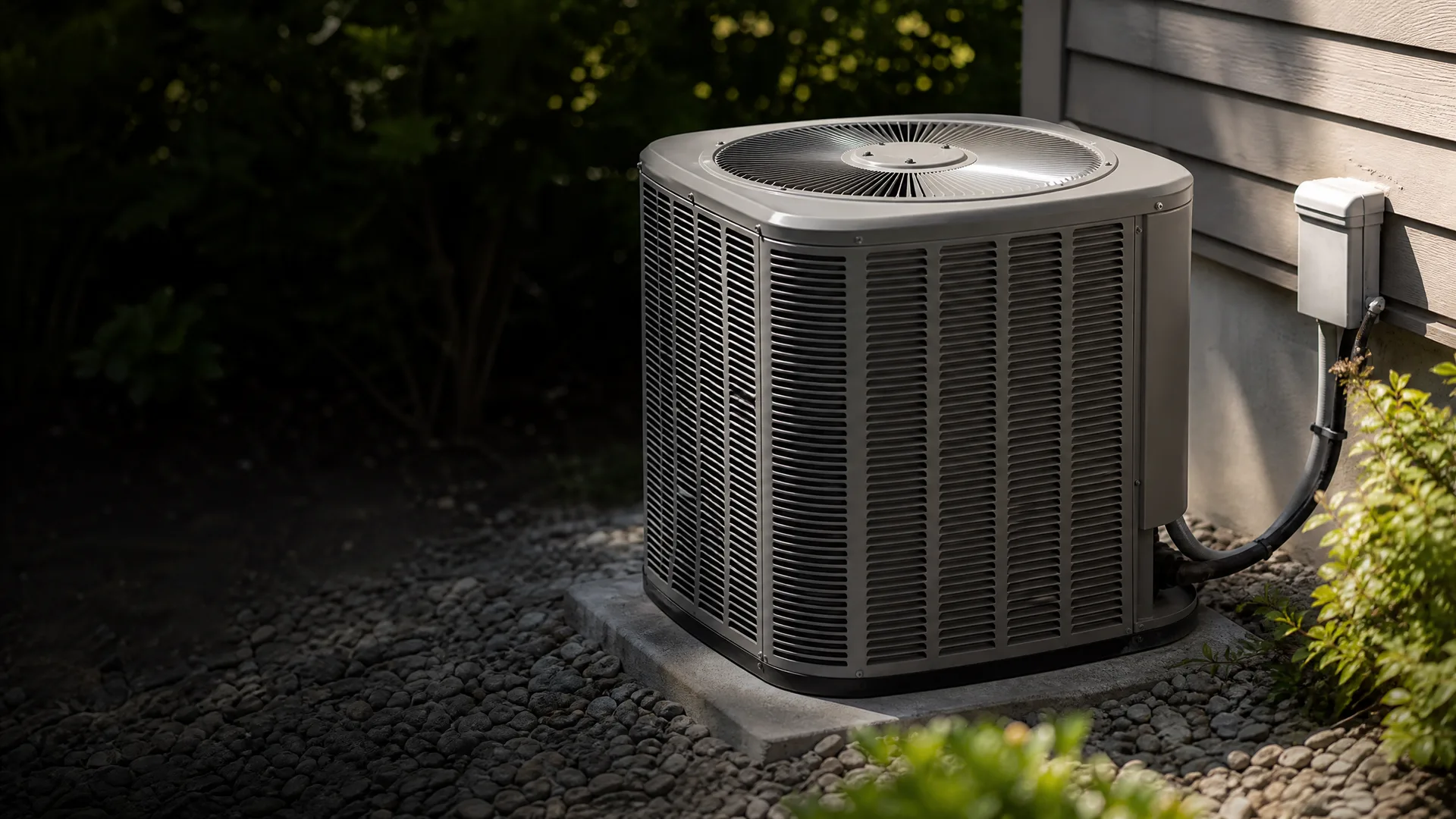
An outdoor air conditioning condenser unit on a concrete pad beside a house with horizontal lap siding, with an electrical disconnect box and conduit on the wall and a green shrub in the lower left foreground.

Why dry dust clogs filters fast

Colorado dust is fine and dry, and it doesn't clump the way humid grime does elsewhere. Instead it works deep into the filter fibers, coating them evenly. A filter can look barely dirty from the front and still be choked with fine particles all the way through, restricting airflow before it looks like it needs changing.

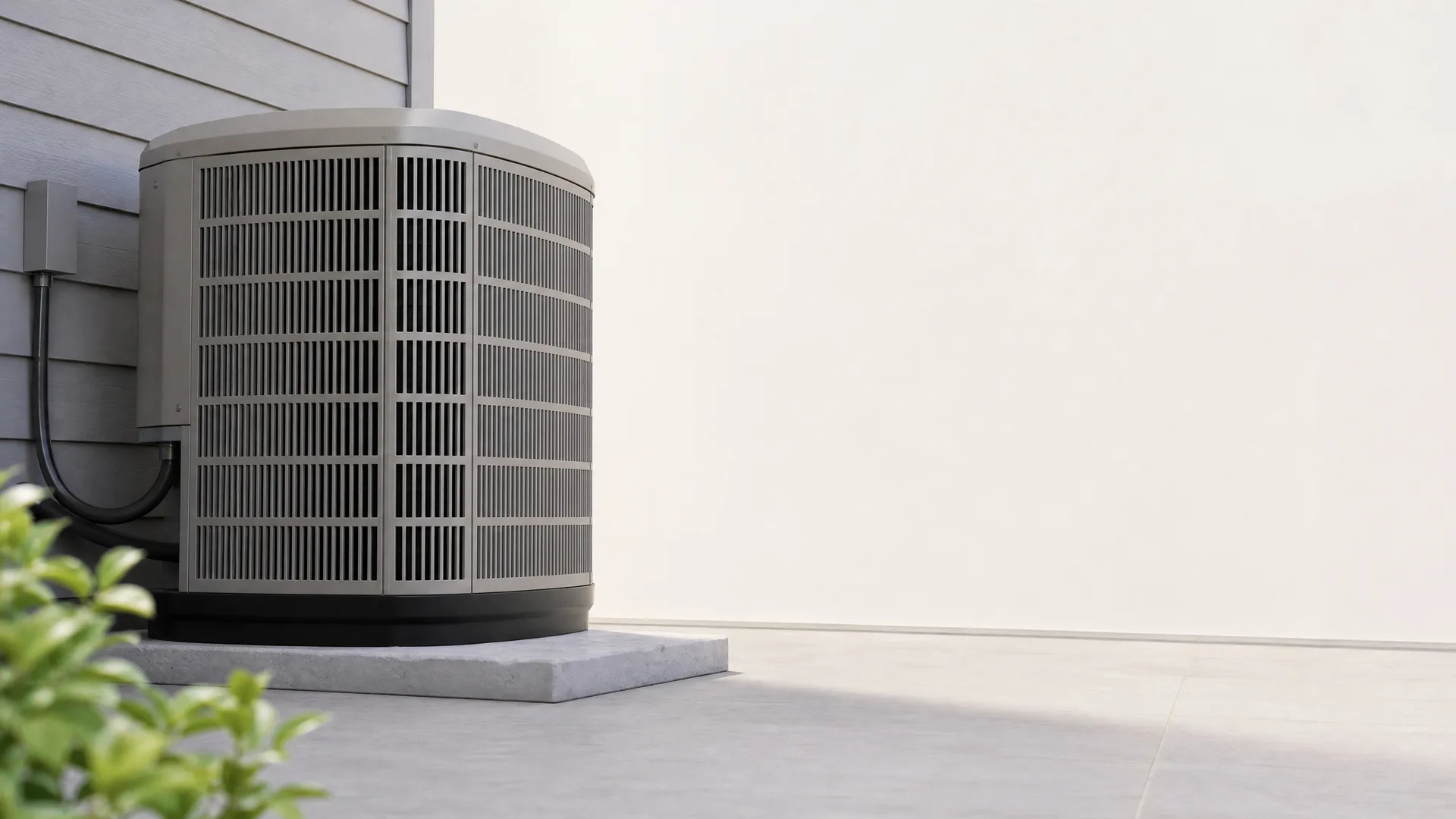
An outdoor air conditioner condenser unit on a concrete pad beside a light stucco wall and vinyl-sided wall, surrounded by gravel.

What a clogged filter does to your AC

Your air conditioner pulls air through that filter before it ever reaches the coil. When the filter is clogged, the system has to work harder to move the same amount of air, and the coil can start icing up even on a hot afternoon. A dirty filter is one of the most common reasons a technician gets called out for an AC that's suddenly not cooling.

1-Inch vs Thicker Media Filter

1-inch filter

  • A standard 1-inch filter has less surface area, so dry Colorado dust loads it up faster.
  • Check it monthly during the summer and expect to replace it around every 90 days, sooner if you run a lot of cooling.
  • These cost less per filter, but you are buying and swapping them more often.
  • If your system came with a 1-inch slot, you are stuck with this size unless the ductwork is modified.
  • A clogged 1-inch filter restricts airflow quickly, which makes the AC work harder to pull air through it.

4-inch or 5-inch filter

  • A thicker media filter has several times the surface area of a 1-inch filter, so it holds more dust before it chokes off airflow.
  • Many homeowners stretch these to every 6 to 12 months instead of every 90 days.
  • They cost more upfront than a 1-inch filter, but you are replacing them far less often.
  • Not every furnace or air handler has the cabinet space for one, so check what your system can fit before switching.
  • Swapping to a thicker filter usually means a one-time change to the filter housing or return duct.
A smiling man in a green long-sleeve shirt stands at a dark kitchen counter with a ceramic mug, with wood cabinets, white tile backsplash, and a window and dining table behind him.
A smiling man with wavy dark hair and a beard, wearing a navy sweater, sits at a kitchen counter with a gray mug, with a dining table, potted plant and windows behind him.
A bearded man in a dark green sweater smiles and looks to his right while seated at a white kitchen counter with a gray mug, with windows and greenery behind him.
A smiling man in a dark navy sweater stands in a home interior beside a counter with a white mug, with a kitchen, hallway and potted plant in the background.

Is your filter overdue right now

Pull it out and hold it to the light. If you can't see light through it, it's done. You might notice the air coming out of the vents feels weaker than it used to, or the AC runs longer to hit the temperature on the thermostat. Some rooms may feel warmer than others. A fine layer of dust might show up faster on furniture even after you've cleaned. None of that means the unit itself is failing. It usually means the filter is making it work harder than it should. Left long enough, a clogged filter can ice up the coil or strain the blower, and that turns a $20 part into a repair call.

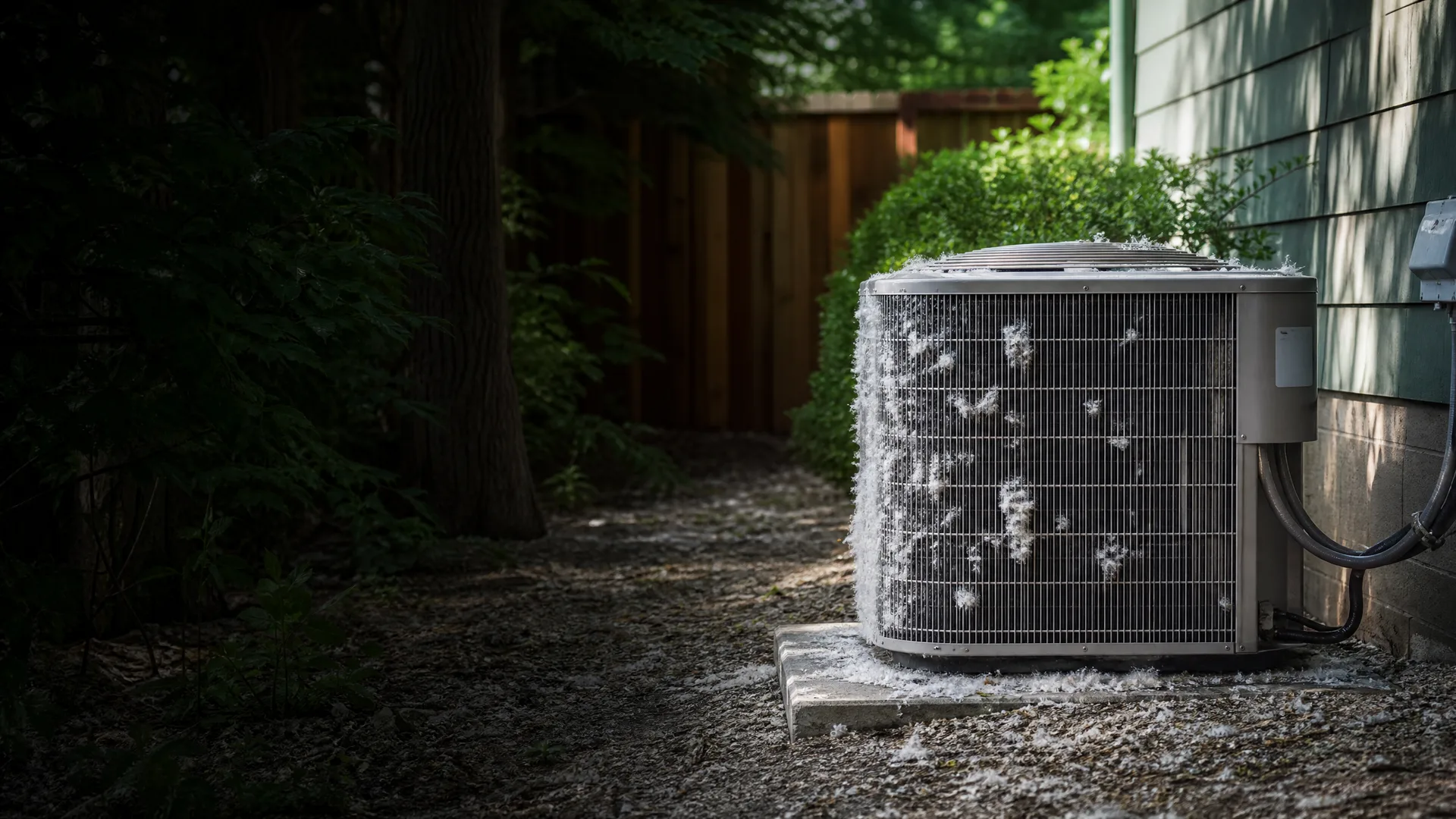
An outdoor air conditioner condenser unit on a concrete pad beside a green clapboard house, with white fluff or debris clinging to its coil grille and scattered on the surrounding gravel, next to shrubs and a wooden fence.

You're out in the side yard in late May, coiling the hose, and you catch the condenser out of the corner of your eye. The fins are packed white with cottonwood fluff, thick enough to look like a dusting of snow. You crouch down and brush a hand across it, and the fluff comes away in a soft clump, but the fins underneath are still matted. It's been drifting off the tree for days, catching on the unit every time the fan kicks on. You make a note to hose it down before the heat sets in for good, and you think about the filter inside too, since the air's been feeling a little heavier through the vents this week.

What actually happens inside the filter when it gets clogged

You've heard to check the filter, but the words on the box don't tell you what's actually going on behind it. You're not looking for another reminder to change it on schedule. You want to know what the clog is doing, physically, so you can judge for yourself when it's bad enough to matter rather than just going by the calendar.

Dust fills the gaps between fibers, and the fan has to work harder to pull air through

A clean filter has open space between its fibers for air to pass through easily. As dust settles in, it doesn't just sit on the surface, it packs into those gaps, and the fan behind it has to pull harder to move the same amount of air. That strain doesn't stay in one place. Less air moves across the evaporator coil inside, and a coil starved of airflow runs colder than it should, to the point where moisture on it can freeze into ice instead of draining away. Once ice builds up, even less air gets through, and the system can end up blowing warm air while the fan keeps running and the compressor keeps working against a blocked path.

An outdoor air conditioning condenser unit on a concrete pad beside a house with light blue horizontal siding, with a shrub to the left and a conduit and disconnect box on the wall to the right.
Before you get your air conditioner maintenance
An outdoor air conditioning condenser unit on a concrete pad beside a house with horizontal lap siding, with a gray electrical disconnect box and conduit on the wall, mulch bed and shrub to the right, and mown grass in the foreground.
After you get your air conditioner maintenance

One request and it's handed off

A clogged filter is an easy thing to keep putting off, since nothing stops working right away. It just runs worse and worse until a part gives out from the strain, and that's a different kind of repair than a filter swap. If your AC is already wheezing or short cycling from dust that's built up past where a new filter fixes it, that's worth having a contractor look at rather than guessing. A local contractor who works on Colorado systems all summer has seen what this dry dust does to a unit over a season, and knows what tends to fail first when a filter's been neglected too long. Send the request and only one contractor gets it, someone who actually works your area, not a handful of companies competing for your callback. Get it looked at before the dust does more than clog a filter.

A two-story house with beige horizontal vinyl siding, gray shingled gables and dormer, white-framed windows, a central entry door, and an outdoor air conditioning unit, set on a partly dry lawn under a clear blue sky.

Colorado summer air holds a dew point of 42°F on average, according to NOAA climate data, which is dry even by this state's standards. Dry air doesn't slow your air conditioner down the way humidity does elsewhere, so the compressor doesn't work as hard to wring moisture out of what it pulls in. The strain on your system here comes from somewhere else: that same dry air carries fine dust, and your filter has to catch it before it reaches the coil. A coil that stays clean runs the way it's supposed to. One that doesn't makes the whole system work harder to do the same job.

NASA POWER T2MDEW county cells weighted by homes

A gray outdoor air conditioning condenser unit on a concrete pad beside a house with horizontal siding and a stone veneer base, with refrigerant line and electrical disconnect box on the wall and flowering shrubs to the left.
A clean condenser like this one moves heat outside the way it's supposed to, with the fins clear and the coils doing their job.
An outdoor air conditioner condenser unit on a concrete pad beside a house with light gray horizontal siding, with mulch and green shrubs on either side and a concrete walkway in the foreground.
Caked dirt like this traps heat against the coil, so the compressor inside has to run longer to cool the same house.

Power costs 15.69 cents per kilowatt-hour statewide

At 15.69 cents per kilowatt-hour, every extra hour your AC runs to push air through a clogged filter shows up on the bill. A dirty filter makes the system work harder for the same cooling, so keeping it fresh through the summer is what keeps that cost down.

EIA-861 2025 statewide residential average

Changing it yourself

You already know to check it monthly through the summer, so swapping a filter is quick once you've got the right size on hand. It's a few dollars and a couple of minutes, no tools needed. The catch is everything behind the filter stays hidden. You can't see how the dust that got through before you caught it has settled on the blower or the coil, and a clean filter doesn't undo that. It only stops things from getting worse from here.


Having it looked at

A contractor who works on AC systems all summer in Colorado knows where this dry dust tends to collect once it's past the filter, and can check the blower and coil while they're in there. That's a look you can't get by pulling the filter yourself. If something's already coated or strained from months of fine dust working through, it gets caught before it turns into a bigger repair. One visit covers more than the filter does on its own.

A bearded man in a dark t-shirt sits on a light sofa, smiling and looking down toward a laptop screen visible at the bottom edge of the frame, with a blurred living space behind him.
A bearded man in a red and dark plaid flannel shirt looks out a frost-edged window at a snow-covered yard, with a gray mug on the sill in the foreground.

Where that leaves you

  • A standard filter in a Colorado home holds up about 90 days through the summer, less if cottonwood or wildfire smoke is heavy that year.
  • Checking it monthly costs nothing and tells you if dry dust is working through it faster than the usual schedule.
  • A clogged filter doesn't shut your AC down, it just makes the compressor run longer and harder until something else fails.
  • A local contractor who services AC systems all summer knows the strain dry dust puts on a filter and what parts fail first when it's ignored.
  • One licensed contractor takes the job, so you're not fielding calls from several companies trying to win the work.
  • Once the filter and the system behind it are checked, you're not guessing anymore about what your AC needs.

Ninety days is the rule of thumb for a standard filter here, and checking it once a month is what keeps that number honest. Colorado dust doesn't announce itself the way grime does in wetter climates, so a quick look under a light each month is the only way to know if yours is running ahead of schedule. Nothing about a clogged filter forces the issue right away. The AC keeps running, just longer and harder, and that strain is what turns a cheap filter swap into a compressor repair down the line. That's the part worth getting ahead of.

If you'd rather have someone look at the whole system instead of guessing from the filter alone, a local contractor who works on AC units all summer has seen what dry dust does to them season after season. They know which parts take the strain first when a filter gets ignored, because they're the ones who get the call when it happens. You'll be matched with one licensed contractor for the job, not a handful of companies competing for your number. Once that contractor has looked at the filter and what's behind it, you're not guessing anymore about where things stand. You'll know if it's a simple fix or something that's been building for a while, and you'll know it from someone who deals with this exact equipment in this exact climate, not a general guess at what might be wrong.

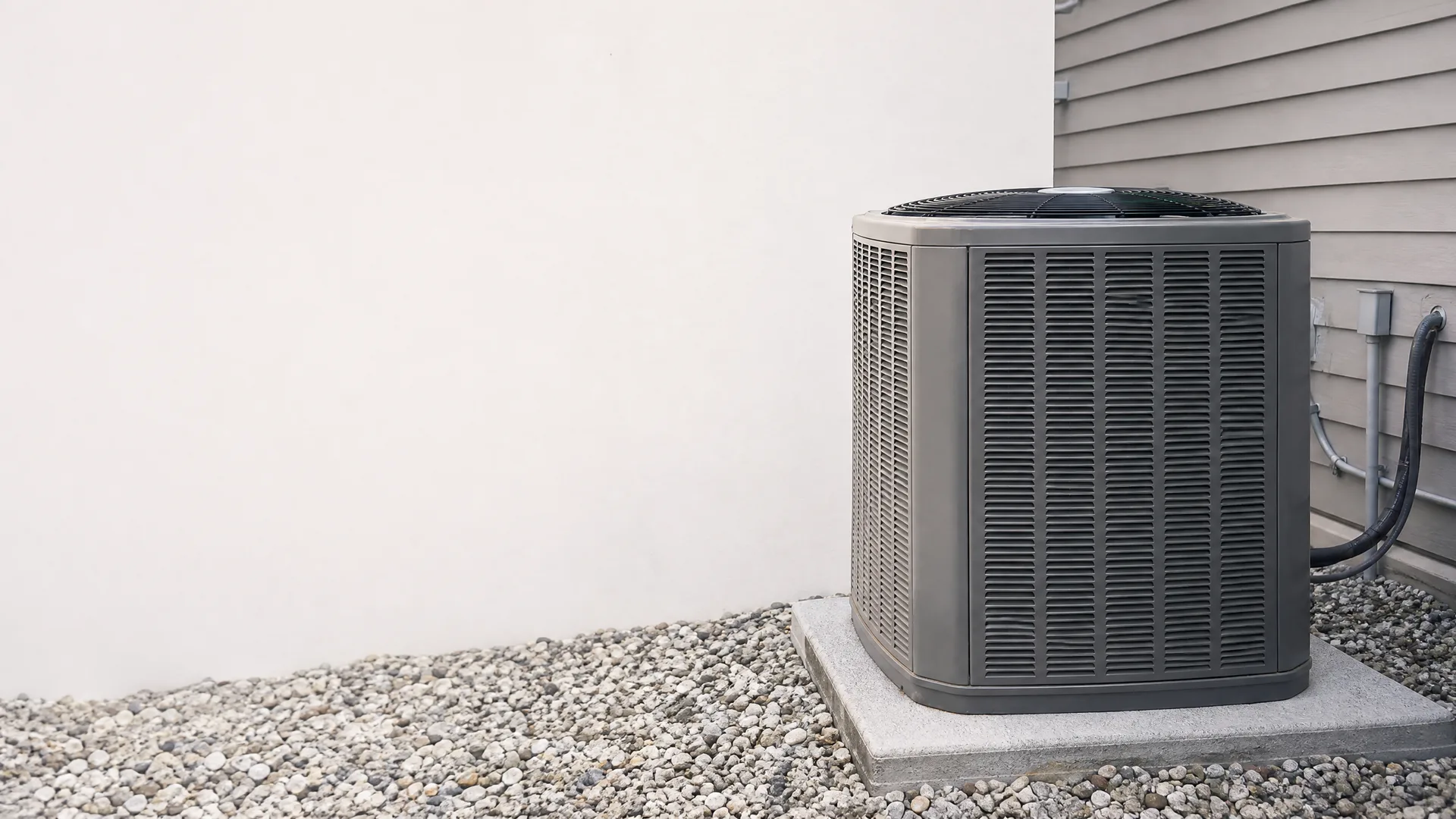
An outdoor air conditioner condenser unit on a concrete pad surrounded by gravel, next to a house wall with horizontal siding, an electrical disconnect box, and conduit, with shrubs nearby.

Done looking for an air conditioner pro

Tune-up, service, or cleaningCentral ACColorado
Step 1 of 2

What ZIP code is the job in?