





A lit mountain lodge-style home at night with evergreen trees, stone accents, and snow-capped mountains in the background.

Heat Pump Repair in Aurora, CO

Tell us about the job

Takes about a minute. No obligation.

RepairHeat PumpArapahoe County, CO
Step 1 of 2

What ZIP code is the job in?

October is when most heat pump trouble in Aurora shows up. The system switches over to heating after months of sitting idle in cooling mode, and whatever was already wearing out, a weak capacitor, a failing reversing valve, a low refrigerant charge, gets asked to do real work again. If your heat pump struggles the first cold mornings, that's not bad luck. It's the weak part finally meeting the load it couldn't handle. Getting it looked at before October, while it's still running cooling, catches most of this before you're stuck without heat.

8 months
October through May, your system heats
3 months
June through August, it cools
16°F
the average winter night it heats against
86°F
the average summer afternoon it cools against
Isometric grey-toned illustration of a cutaway house showing interior rooms, ceiling ductwork and an air handler, connected by lines to an outdoor condenser unit beside the building.
Your system heats October through May and cools June through August.

NOAA nClimDiv, 1991–2020 normals

A reversing valve that's stuck doesn't always mean the valve is bad.

Low charge or a weak contactor can make it act that way. Check the whole circuit before you replace the part.

A heat pump running on a bad part costs more here than most places

Power costs 14.92 cents a kWh statewide
97 damaging wind events from 2015 to 2024
175 hail events from 2015 to 2024

Half the homes in Arapahoe County were built in 1986 or later. If yours is one of them, your heat pump probably isn't that old either, even if this is the first real problem you've had with it. A stuck reversing valve or a failing capacitor at that age is usually a single bad part, not a system breaking down for good. Worth knowing before anyone tells you it's time to replace the whole unit.

Your heat pump's problem is probably one part, not the weather

Arapahoe County sees its share of hail, wind and winter storms, same as most of the Front Range. None of that targets a heat pump specifically. What's going on with yours is most likely a single part that wore out and is now being asked to work. Worth tracking down and fixing rather than guessing.

Find a contractor
A gray air-source heat pump mounted on a concrete pad next to a house with gray vinyl siding, surrounded by gravel and flanked by green shrubs and white hydrangea flowers.

The system is young. Fix the part that failed.

A heat pump installed with a newer house has years of running left in it. Getting the actual part diagnosed, the capacitor, the valve, whatever it turns out to be, is worth doing before anyone brings up replacing the unit.

It's blowing air that doesn't feel like heat

A heat pump in heating mode should feel warm at the vent, not room temperature. Air that feels lukewarm or cool usually means the system is stuck in defrost, low on charge, or the reversing valve isn't fully shifting over. The system can still run and still move air while failing to actually heat it.
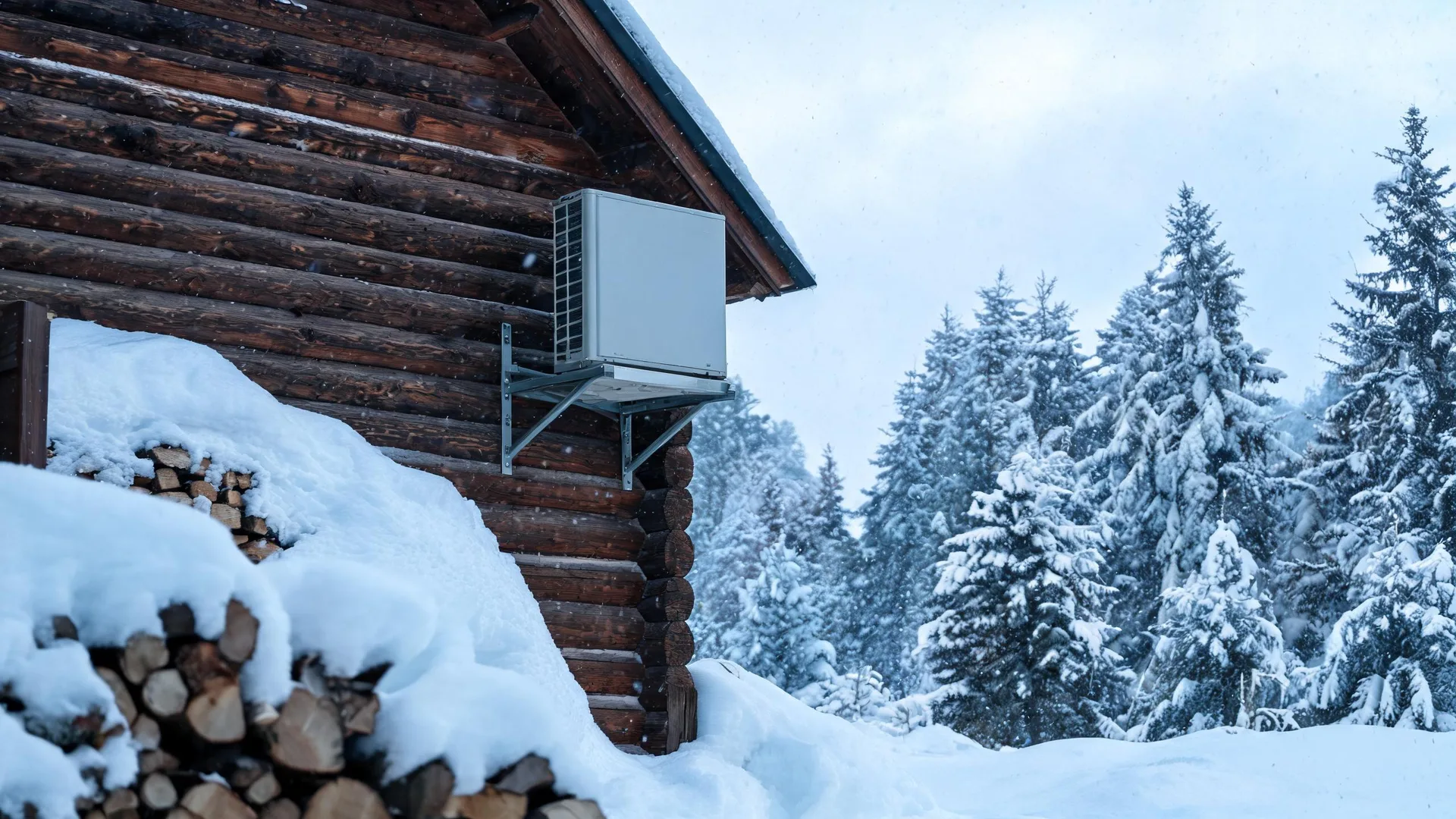
It's cycling on and off faster than it used to

Short cycling wears on the compressor every time it happens. Something is forcing the system to shut down early, a dirty coil, a failing sensor, a refrigerant level that's off. A system that used to run long steady stretches and now kicks on and off every few minutes is telling you one of those parts is already failing.

A heat pump that's struggling still moves air, so it's easy to let it ride for a few days. The compressor doesn't see it that way. Every cycle it runs low on charge or against a reversing valve that's not fully shifted, it's working harder than it should to move the same heat. That strain doesn't undo itself when the system finally shuts off. A capacitor that's weak gets weaker. A compressor running against the wrong pressures wears faster than one running normal. What starts as a single part costing a single repair can turn into a compressor failure if it keeps being asked to push through a problem instead of getting fixed. The system running at all isn't the same as the system running fine.

A diagnostic visit starts with the thermostat and works back toward the unit. A tech checks what temperature is being called for against what the system is actually delivering, then moves outside to the condenser and checks pressures, amp draw on the compressor, and whether the reversing valve is shifting when it's told to. Electrical components get tested under load, not just looked at, since a capacitor or contactor can look fine sitting still and fail the moment it has to do work. If airflow is part of the complaint, the coil and blower get checked too, since restricted airflow can mimic a refrigerant problem. The goal is to find the one part that's actually failing, not to guess based on symptoms alone, since a weak capacitor and a low charge can feel the same at the thermostat but call for entirely different fixes.